Underground Broken Pool Pipes in Monmouth County – Signs You Need A Pool Pressure Testing
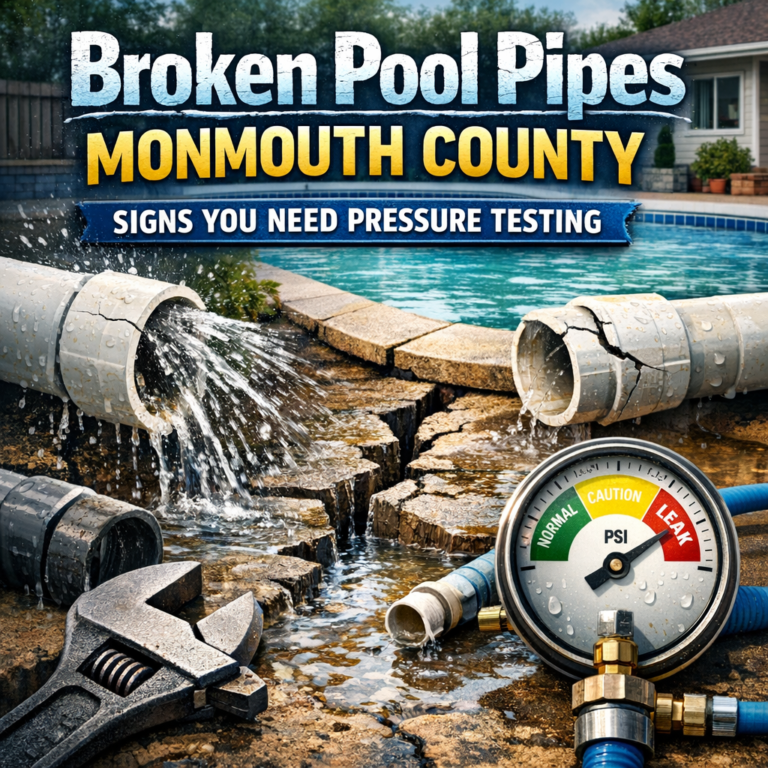
When you notice your residential pool losing water faster than usual, one possible culprit is underground broken pool pipes in Monmouth County. These hidden plumbing issues can cause significant water loss, damage to your pool structure, and costly repairs if left untreated. Detecting and addressing broken pipes early is essential to maintain your pool’s health and save on expensive fixes. This article will guide you through the common signs of broken pool pipes and explain why professional pool pressure testing is a must-have service for Monmouth County homeowners.
What Are Underground Broken Pool Pipes and Why Do They Matter?
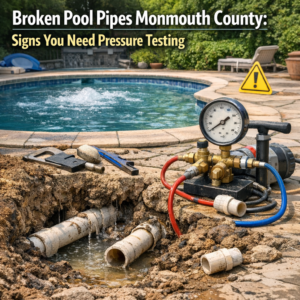
Your pool’s plumbing system includes suction lines, return lines, main drains, and dedicated spa or cleaner lines. Over time, these pipes buried underground can develop cracks, breaks, or leaks due to ground movement, aging materials, or improper installation. Underground broken pool pipes cause water to leak out beneath your pool, leading to noticeable drops in water level and sometimes soil erosion around your pool area.
Without proper detection and repair, broken pipes can not only waste thousands of gallons of water but also undermine pool safety and comfort. Fortunately, you don’t have to guess where the problem lies thanks to professional services like pool pressure testing in Monmouth County.
Common Signs of Broken Pool Pipes in Monmouth County
If you own a pool in Monmouth County—whether in neighborhoods near the popular Shark River Park in Neptune or near the bustling Monmouth Mall area—watch for these telltale signs of broken underground pool pipes:
- Rapid water loss: If your pool water level drops excessively beyond normal evaporation rates, it’s a clear red flag.
- Soft or sinking spots: The ground near your pool deck feels spongy or unstable, possibly caused by water escaping underground.
- Low pool water pressure: You might notice weak water flow from pool jets or spas.
- Unexplained increase in your water bill: Hidden leaks can add up in water usage.
- Visible damage or cracks: Sometimes cracks appear in your pool shell or surrounding paving due to soil shifting from leaks.
If you experience any of these issues, engaging experts for pool pressure testing NJ—like those at Pool Patcher—is the logical next step.
Why Pool Pressure Testing Is Vital for Detecting Broken Pool Pipes
Pool pressure testing is a specialized process that isolates and tests each plumbing line in your pool for leaks or breaks. At Pool Patcher, we use industry-leading electronic equipment to execute pressure testing on all key plumbing lines, including:
- Suction lines
- Return lines
- Main drain lines
- Spa lines
- Dedicated cleaner lines
This testing confirms whether underground broken pool pipes exist and pinpoints the exact pipe and location that need repair. Unlike random digging or guesswork, pressure testing prevents unnecessary damage and repair expenses by providing accurate leak diagnosis. You can learn more about this essential service here: pool pressure testing NJ.
How Pool Patcher Handles Broken Pool Pipe Locating in Monmouth County
Once a pressure test identifies a leak, Pool Patcher takes the next step to locate the exact underground pipe break using electronic locating equipment. This approach minimizes unnecessary digging and site disturbance around your pool. We serve numerous Monmouth County areas, including locations near the historic Twin Lights State Historic Site in Highlands and the family-friendly Big Brook Park in Marlboro Township.
Our trained technicians then provide precise repair guidance, ensuring that only the affected pipe areas are serviced. This focused repair approach saves you time and money.
Additional Related Services to Consider
To comprehensively address pool leaks, Pool Patcher also offers a suite of services that complement pool pressure testing and broken pipe detection, such as:
- Pool leak detection NJ using electronic equipment to find leaks in vinyl liner, gunite, fiberglass pools, and more.
- Pool Pipe Video Inspection NJ to visually confirm pipe breaks or blockages before repair.
- Vinyl Liner Leak Repair NJ for punctures and seam separations.
- Comprehensive leak confirmation before planning repairs, ensuring evaporation or other causes are ruled out.
Choosing a company specializing in residential leaks across Monmouth County ensures your pool receives focused, professional attention without unnecessary services like general cleaning or equipment troubleshooting.
Why Choose Pool Patcher for Your Pool Leak Needs in Monmouth County?
At Pool Patcher, we specialize exclusively in residential pool leak detection and repair services in Monmouth County, including neighborhoods around Asbury Park Boardwalk and Holmdel Park. Here’s why local homeowners trust us:
- Advanced electronic leak detection and pressure testing equipment
- Precise underground broken pool pipe locating to reduce drilling and labor
- Transparent, accurate diagnosis preventing unnecessary repairs
- Skilled technicians focusing only on leak-related services
- Serving Monmouth, Middlesex, Ocean, and Mercer counties in New Jersey
Start protecting your pool today by scheduling a consultation with us at (732) 705-7344 or visiting PoolPatcher.com.
Service Area Highlights
We proudly serve Monmouth County with expert leak detection and repair services across towns and communities such as:
- Middletown Township (near Sandy Hook Beach)
- Freehold Township (close to Monmouth Battlefield State Park)
- Howell Township (near Lauren’s Woods)
- Manalapan Township (adjacent to Cliffwood Beach)
- Wall Township (home of Seven Presidents Oceanfront Park)
For broader pool services in Monmouth and surrounding counties, explore our county service pages: Monmouth County, Ocean County, Middlesex County, and Mercer County.
Frequently Asked Questions (FAQs)
Q: Can pool leaks cause my pool pump to stop working?
A: Leaks themselves don’t usually cause pump failure, but leaks affecting suction lines can reduce water flow and strain equipment. Proper leak detection and repair ensure your system runs smoothly.
Q: How long does pool pressure testing take?
A: Testing typically takes a few hours depending on pool size and plumbing complexity. We keep you informed throughout the process.
Q: Do you service saltwater pools?
A: Yes, we specialize in leak detection in all residential pools, including saltwater systems.
Q: Will you repair the broken pipes on-site?
A: We locate the exact leak and provide detailed repair recommendations but do not perform general plumbing repairs ourselves. We work closely with trusted repair contractors.
Conclusion
If you suspect underground broken pool pipes in your Monmouth County pool, don’t wait for the problem to worsen. Expert pool pressure testing by Pool Patcher helps you efficiently diagnose and locate hidden leaks, saving water, money, and frustration. Call us today at 732-705-7344 or visit PoolPatcher.com to schedule your professional pool leak inspection and pressure testing service.
Optimize your pool’s health and enjoy worry-free swimming all season with Pool Patcher—your trusted partner for pool leak repair NJ.
Explore related services: pool leak repair NJ, broken pool pipes NJ, and pool leak detection NJ.