I Had a Diver for My Pool Leak and I’m Still Losing Water in Monmouth County and Surround Areas
Swimming pools are a fantastic way to enjoy your backyard, cool off in the summer, and create lasting memories with family and friends. However, one frustrating issue many pool owners face is a persistent swimming pool losing water problem. If you’ve already had a diver inspect your pool for leaks but are still seeing your water levels drop, you’re not alone—and there are important steps to take next.
In this article, we’ll explore why water loss continues even after professional inspections, how to identify hidden leaks, and where to turn for trusted repair services in Monmouth County and surrounding areas.
Why Am I Still Losing Water After a Leak Inspection?
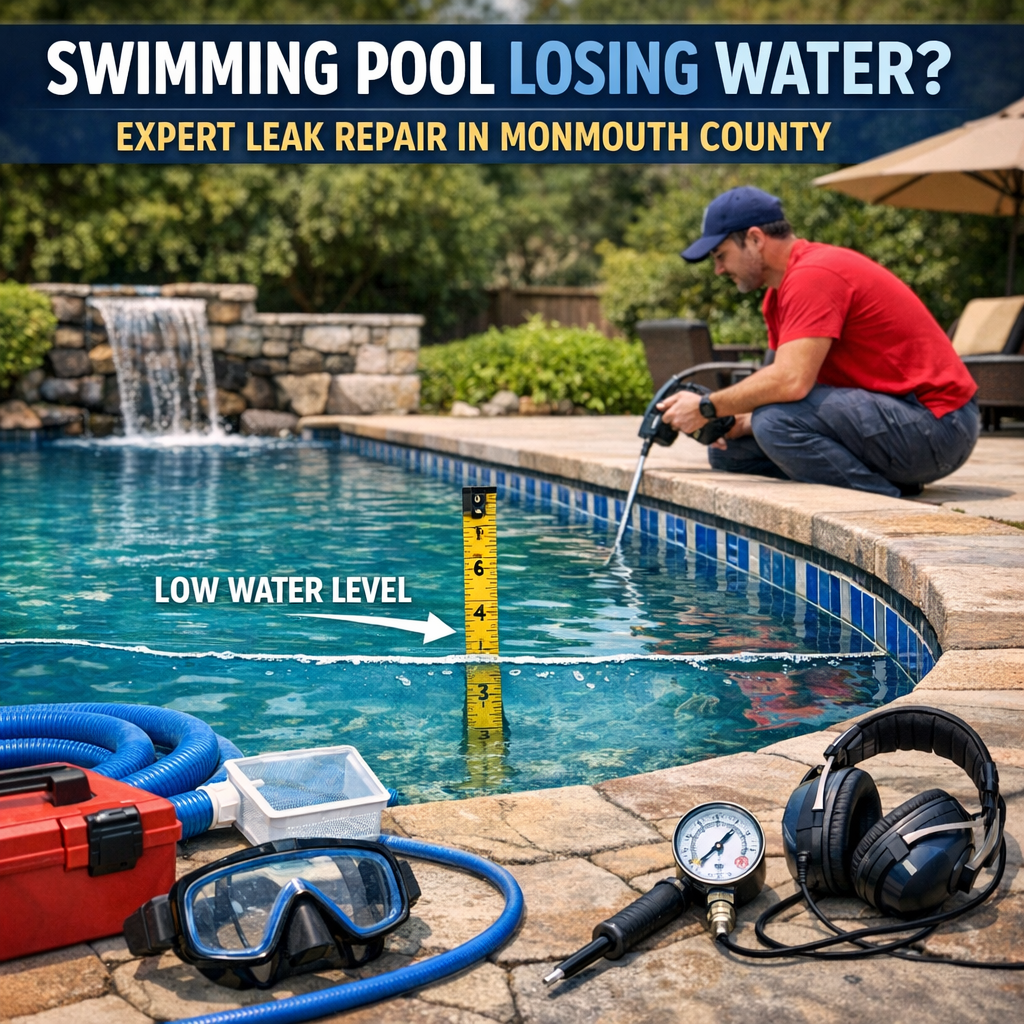
Having a diver inspect your pool is often the first and most thorough step pool owners take to find leaks. Divers can visually inspect hard-to-reach areas such as:
- The main drain
- Pool walls below the waterline
- Return jets
- Light niches
Despite this, if your pool is still losing water, several factors might be at play:
1. Evaporation vs Leak Confusion
Not all water loss is due to leaks. Evaporation plays a large role, especially in hot and dry months. On average, evaporation can cause water loss between 1/4 inch to 1/2 inch per day depending on weather conditions.
Tip: To measure whether you have a leak or evaporation problem, perform the bucket test:
- Fill a bucket with pool water to about an inch from the top.
- Place the bucket on a pool step, ensuring the water inside the bucket is at the same level as the pool.
- Mark the water levels inside the bucket and the pool.
- After 24 hours, compare the water loss inside the bucket versus the pool.
- If the pool water level dropped more than the bucket, it’s likely you have a leak.
2. Hard-to-Spot Leaks
A diver may not always detect:
- Hairline cracks in concrete or vinyl liners
- Leaks inside plumbing lines buried underground
- Leaks behind pool tiles or coping
- Filter or pump leaks contributing to water loss
Leaks behind the pool shell or underground plumbing require specialized detection techniques like pressure testing, electronic leak detection, or infrared scanning.
3. Seasonal and Usage Factors
Heavy pool usage, pool cleaning, or backwashing your filter frequently can also cause apparent water loss. Check if your water loss correlates with increased usage or maintenance activity.
How to Identify Hidden Pool Leaks
If a traditional diver inspection didn’t find the source of your water loss, consider the following methods:
Advanced Leak Detection Techniques
- Pressure Testing: This involves isolating sections of your plumbing system and testing for pressure drops which indicate leaks.
- Dye Testing: Colored dye is released near suspected leak areas to observe if it’s drawn into cracks or fissures underwater.
- Electronic Leak Detectors: These devices pick up sound frequencies emitted by escaping water.
- Infrared Cameras: Can reveal temperature anomalies that suggest water is escaping behind pool surfaces.
Common Hidden Leak Locations
- Pool Shell Cracks: Small cracks in plaster, concrete, or fiberglass can be difficult to see but cause significant water loss.
- Skimmer and Return Jets: Cracks or seal failures can cause leaks inside the pool walls.
- Pool Equipment Connections: Loose fittings between pump, filter, heater, and valves.
- Seals Around Pool Lights: Aging or damaged light fittings can leak internally.
- Underground Plumbing: Pipes buried in trenches leading to the pool may rupture or corrode.
What To Do If You’re Still Losing Water in Monmouth County?
If you’ve already had a diver inspection but are still seeing your swimming pool losing water, it’s time to take action with a professional pool leak detection and repair company specializing in Monmouth County and surrounding areas.
Why Choose a Local Specialist?
- Familiarity with typical construction styles and common pool issues in Monmouth County.
- Fast response and repair times to prevent further water damage.
- Reputation-based services with trusted customer reviews.
- Expertise in handling municipal water restrictions and local regulations.
PoolPatcher.com is the go-to solution for many residents in this area. With years of experience and a full range of diagnostic tools, they help pool owners stop water loss quickly and efficiently.
PoolPatcher.com: Your Trusted Pool Leak Repair Partner
If you’re tired of dealing with water loss, here’s why you should consider PoolPatcher.com:
Comprehensive Leak Detection
Using a combination of diving inspections, pressure testing, dye testing, and modern leak detection tools, they locate even the most elusive leaks.
Professional Repairs
From minor plaster cracks to underground pipe replacements, they tackle all types of leaks to restore your pool to full health.
Local Expertise in Monmouth County and Surround Areas
Their technicians understand the unique challenges pools face in this region—including soil conditions, weather impacts, and usage patterns—and tailor their approach accordingly.
Customer-Focused Service
- Prompt scheduling and detailed leak reports
- Transparent pricing with no surprise fees
- Reliable follow-up and warranties on repairs
Contact Information
If you suspect your pool is losing water and you want a thorough, no-nonsense evaluation, reach out today:
Phone: 732-705-7344
Website: PoolPatcher.com
Tips to Prevent Future Pool Water Loss
Once your leaks are repaired, follow these tips to reduce water loss going forward:
1. Maintain Proper Water Chemistry
Poor water balance can deteriorate plaster and concrete faster, increasing leak risk. Regularly test and adjust pH, alkalinity, and calcium hardness.
2. Inspect Pool Equipment Monthly
Check for leaks around pumps, filters, heaters, and valves. Address any dripping or puddles immediately.
3. Use a Pool Cover
A quality pool cover reduces evaporation significantly when your pool isn’t in use.
4. Winterize Properly
In colder months, winterize your pool to prevent freeze-related cracks and damage that cause leaks.
5. Regular Professional Inspections
Plan for an annual inspection by a professional leak detection service to catch issues early.
Conclusion
Experiencing persistent swimming pool losing water issues even after having a diver inspect your pool can be frustrating and puzzling. However, not all leaks are visible to divers, and hidden cracks or underground pipe leaks often require advanced testing methods.
If you live in Monmouth County or the surrounding areas, trusting a local professional like PoolPatcher.com ensures you get comprehensive leak detection and effective repairs customized to your pool’s specific needs.
Don’t let water loss continue to drain your resources—take action today by scheduling a consultation and stop wasting water and money on a leak that can be fixed.
Remember: For reliable, expert pool leak detection and repair in Monmouth County, call PoolPatcher.com at 732-705-7344 and put an end to your water loss woes!